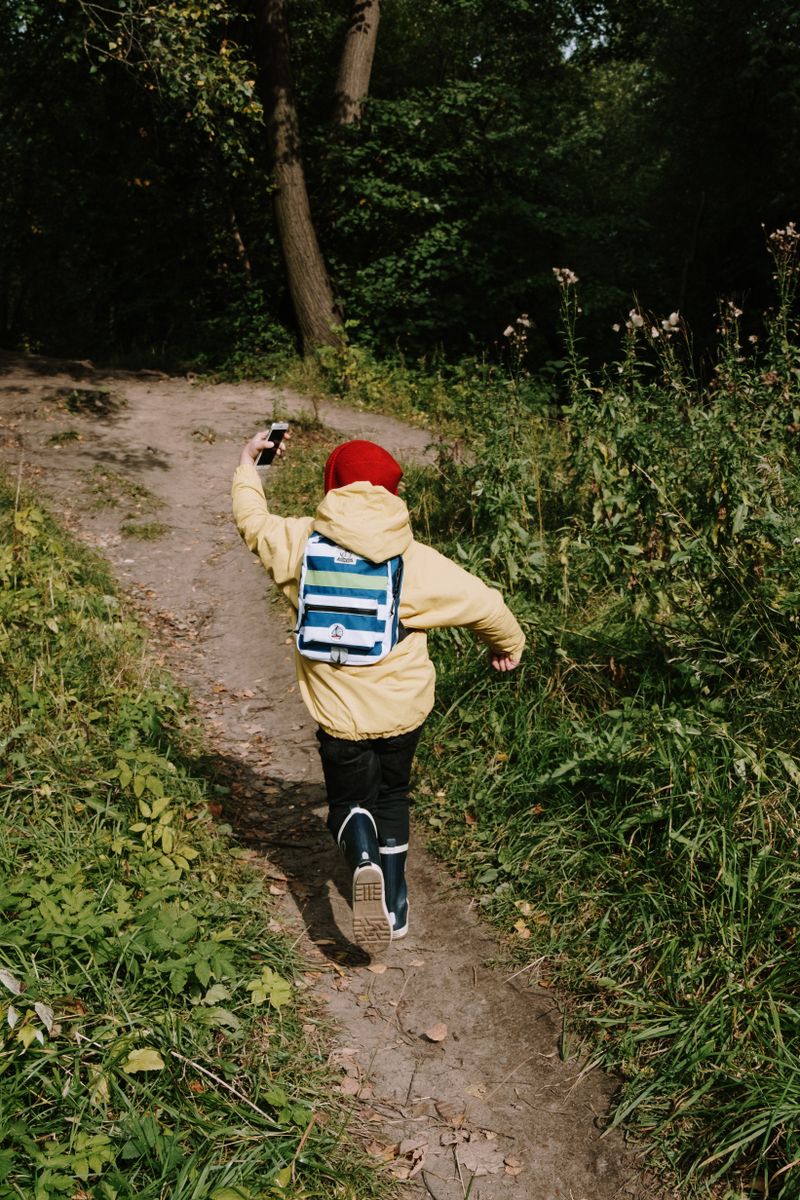
Trail Talk Without Words: Hiking with a Non-Speaking or AAC-Using Kid
Hiking advice tends to assume a kid can say "I need a break" or "that hurts" out loud, in the moment, before things go too far. For a non-speaking child or a child who uses AAC (augmentative and alternative communication, such as a tablet, a picture board, or sign language), the trail asks a lot of communication in an environment that isn't always easy to communicate in. Uneven ground, gloves in cold weather, glare on a screen, or simply being a few steps behind can all get in the way of a device or a gesture doing its job. A little planning ahead of time can close a lot of that gap.
🎒 Bring the Communication Tools You'd Bring Anywhere Else
A hike is not the place to leave the AAC device at home because "it's just a walk." Pack it charged, in a weatherproof case if needed, and easy to reach without having to stop and dig through a bag. If your child uses a low-tech option like a picture board or cards, a laminated version clipped to a belt loop or backpack strap keeps it accessible without extra hands needed to hold it.
🗣️ Build a Small Trail-Specific Vocabulary
Before heading out, it can help to review or add a few hike-specific words or icons your child might need on this particular outing: stop, break, loud, hot, tired, water, bathroom, done. These are different from the everyday words a device is often set up for, and having them ready in advance means your child isn't stuck building a new message from scratch mid-meltdown.
👀 Watch for Non-Verbal Signals Too
Not every child who struggles with expressive communication uses AAC consistently in every moment, especially under stress. A change in breathing, pulling at clothing, stopping in place, or covering ears can all be communication too, even without a device involved. Treat these the same way you'd treat a spoken "I need a break," rather than waiting for a formal request before responding.
🧭 Plan the Trail With Communication in Mind
- Pick routes with easy pull-off spots. A trail with regular flat spots to stop, sit, and use a device comfortably beats a narrow or steep trail where stopping safely is hard.
- Think about hands and gear. If your child needs both hands free to sign or hold a device, a hands-free hydration pack or a hip pack instead of a backpack with buckles can make a difference.
- Check the tech conditions. Bright sun can wash out a screen, and cold weather can drain a battery faster or make touchscreens less responsive with gloves on. A basic screen shade or a warm pocket to store a device between uses can help.
- Loop in the whole group ahead of time. If you're hiking with extended family, friends, or another family, a short heads-up beforehand about how your child communicates helps everyone respond appropriately instead of guessing or, worse, talking over your child to you.
💬 The Goal Isn't Constant Conversation
A hike doesn't need a running dialogue to be a success. Plenty of speaking kids hike in comfortable silence too. The goal here is making sure your child has a way to say the things that matter, like needing a break or feeling unwell, at the moment they need to say it, not fifteen minutes later once things have already gotten hard.
For more on reading distress signals in general, see .

🌲 TrailKids is free to use, but not free to make. If it's helped you, consider a small donation to keep it running. ☕